Healthcare receivables look very different from retail or commercial debt. Patients often discover a balance only after insurance has paid part of a claim or denied it, and hospitals and physician groups judge their revenue cycle partners as much by patient satisfaction as by net recovery.
1. Bill insurance first before asking the patient to pay
Many disputed medical balances are actually unresolved insurance claims—a missing subscriber ID, a coding mismatch or a claim that never cleared the clearinghouse. Collecting from the patient while an insurance claim is still open leads to complaints and rework.
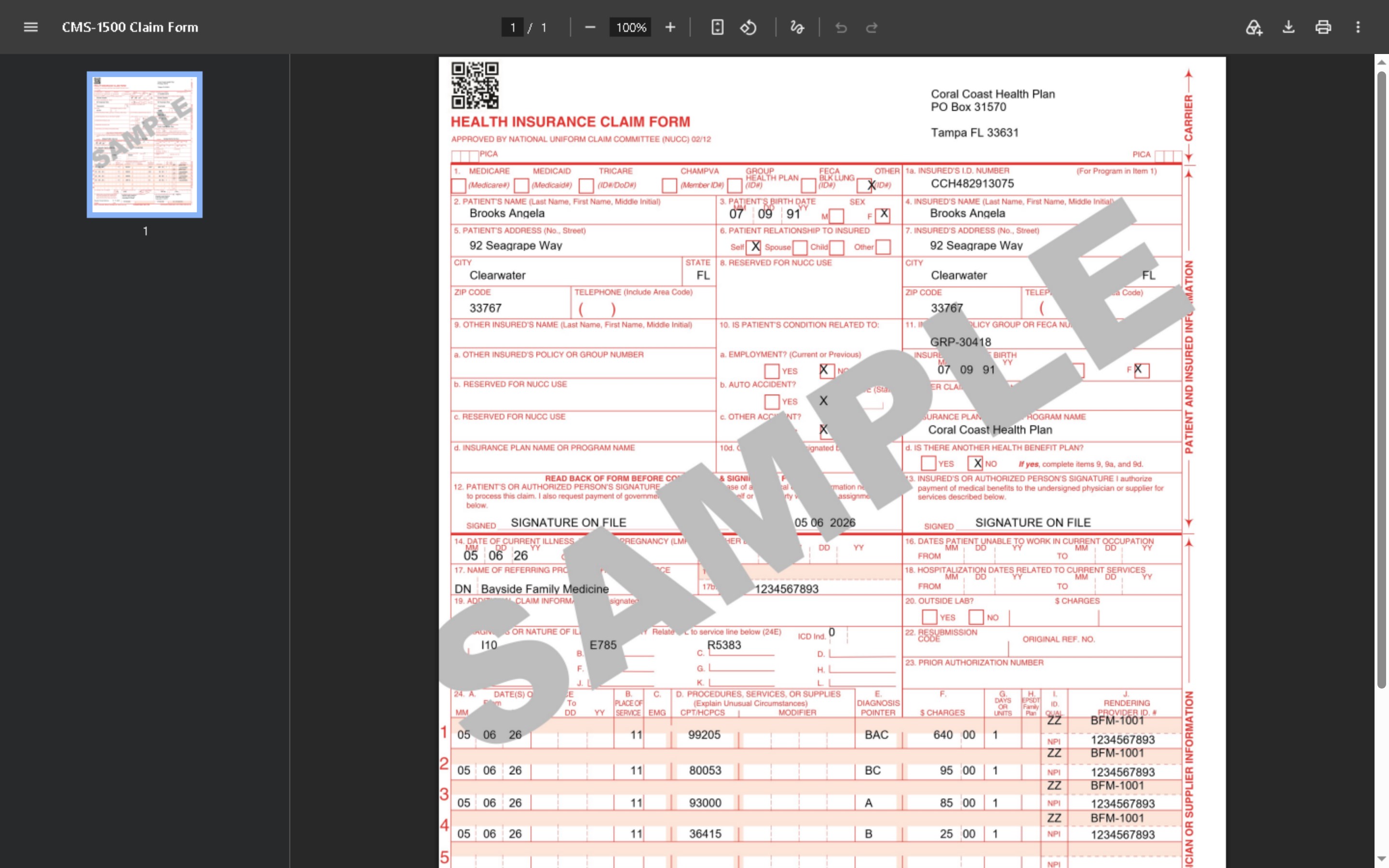
- CMS-1500 and 837P claims from the patient's record. CollectPlus stores procedures (CPT/HCPCS), diagnoses (ICD-10), rendering providers and subscriber policies directly on the record, and produces CMS-1500 (02/12) forms and 837P electronic claim files.
- Clearinghouse acknowledgements and follow-up tasks. Import 999 and 277CA acknowledgements over SFTP; when a claim is rejected, CollectPlus creates a task for the billing team so it is fixed and re-sent.
- Hold patient collection steps while insurance is pending. Separate insurance aging from patient aging so patient collection letters wait until the payer has answered. Read more about medical claims in CollectPlus.
2. Clear settlements within each provider's authority
As credit reporting plays a smaller role in medical collections, prompt-pay discounts, financial assistance referrals and structured settlements have become the primary tools for resolving patient balances.
- Default settlement authority per provider. Record the percentage of a balance each healthcare provider accepts without separate approval. Collectors can complete offers within that authority on the call.
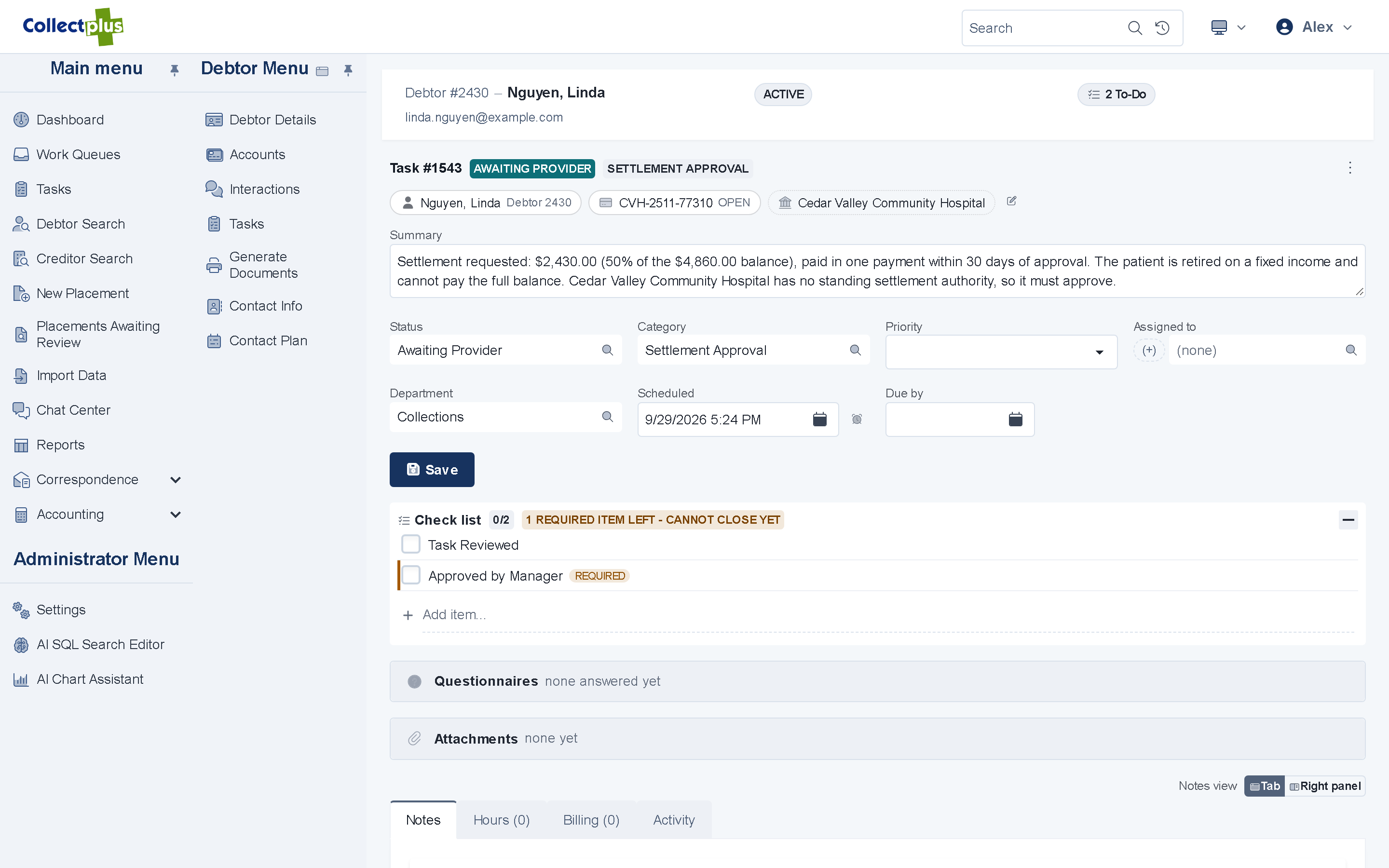
- Provider approval requests. When a patient's hardship or offer goes beyond the standing authority, the collector opens an approval request that sits in a dedicated work queue until the provider responds.
- Contract-accurate fee rules. Configure each provider's record to deduct your fee from payments or invoice it, and to bill or waive fees on settlement discounts according to the provider's contract.
3. Patient-friendly letters, payment plans and self-service
State rules and hospital policies increasingly require clear written notices, financial assistance disclosures and accessible payment options before any extraordinary collection action is considered.
- Custom Word templates per provider. Send itemized statements, financial assistance referral letters and settlement offers using your provider-approved wording, with QR codes that open the payment page on a phone.
- Installment plans and e-signature. Build payment plans from templates, send agreements for online signature with ICCOSign, DocuSign or SignNow, and run scheduled card and ACH batches.
- Self-service patient portal. Patients can sign in at their convenience to check balances across visits, make a payment, sign a document or send a secure message to your team.
4. Security and audit controls for sensitive patient records
Healthcare clients and auditors expect strict access and audit controls over patient records. CollectPlus includes two-factor sign-in by email or text, role-based permissions down to individual fields, a detailed audit log of changes with old and new values, and database encryption for sensitive fields such as Social Security numbers. Explore medical debt collection software.