Regulation F sets national standards for how third-party debt collectors communicate with consumers across phone calls, letters, emails and text messages. While your compliance counsel sets your agency's policies, your collection software determines how consistently collectors follow those policies every day.
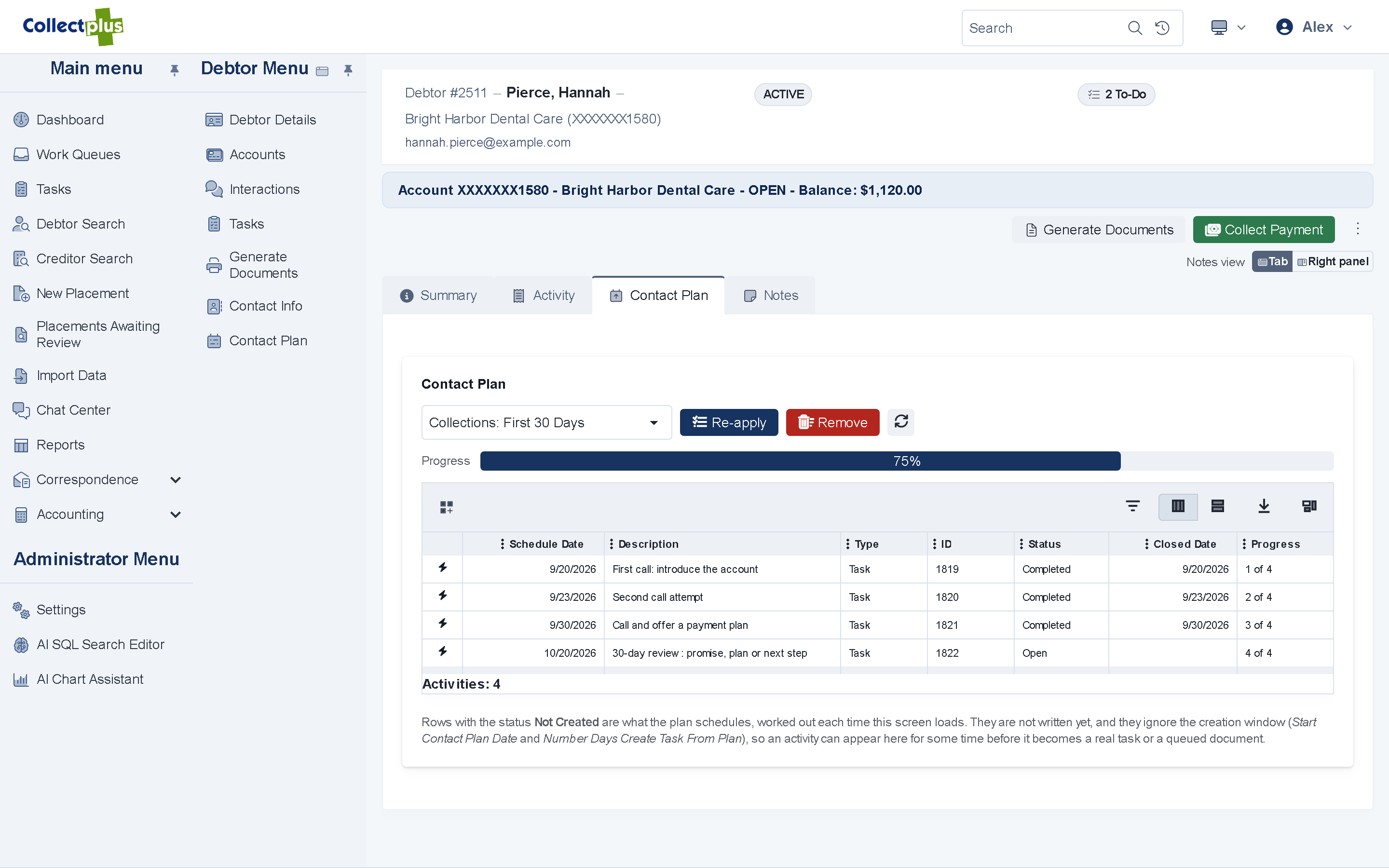
1. Structuring contact plans around call and letter spacing
Under Regulation F's telephone call frequency presumptions (often called the 7-in-7 rule), a collector is presumed to comply with the prohibition against harassing call frequency when placing no more than seven telephone calls to a consumer about a particular debt within seven consecutive days, and waiting at least seven days after having a telephone conversation about that debt.
In CollectPlus, administrators configure contact plans that define the sequence and spacing of letters, emails, texts and collector call tasks from the day an account is placed:
- Creditor-specific contact plans. Assign a default contact plan to each creditor client so new placements automatically schedule the initial notice and spaced follow-up tasks.
- Ranked work queues. Build work queues from your own criteria—such as account status, last contact date, creditor or balance—so collectors work accounts that are ready for outreach.
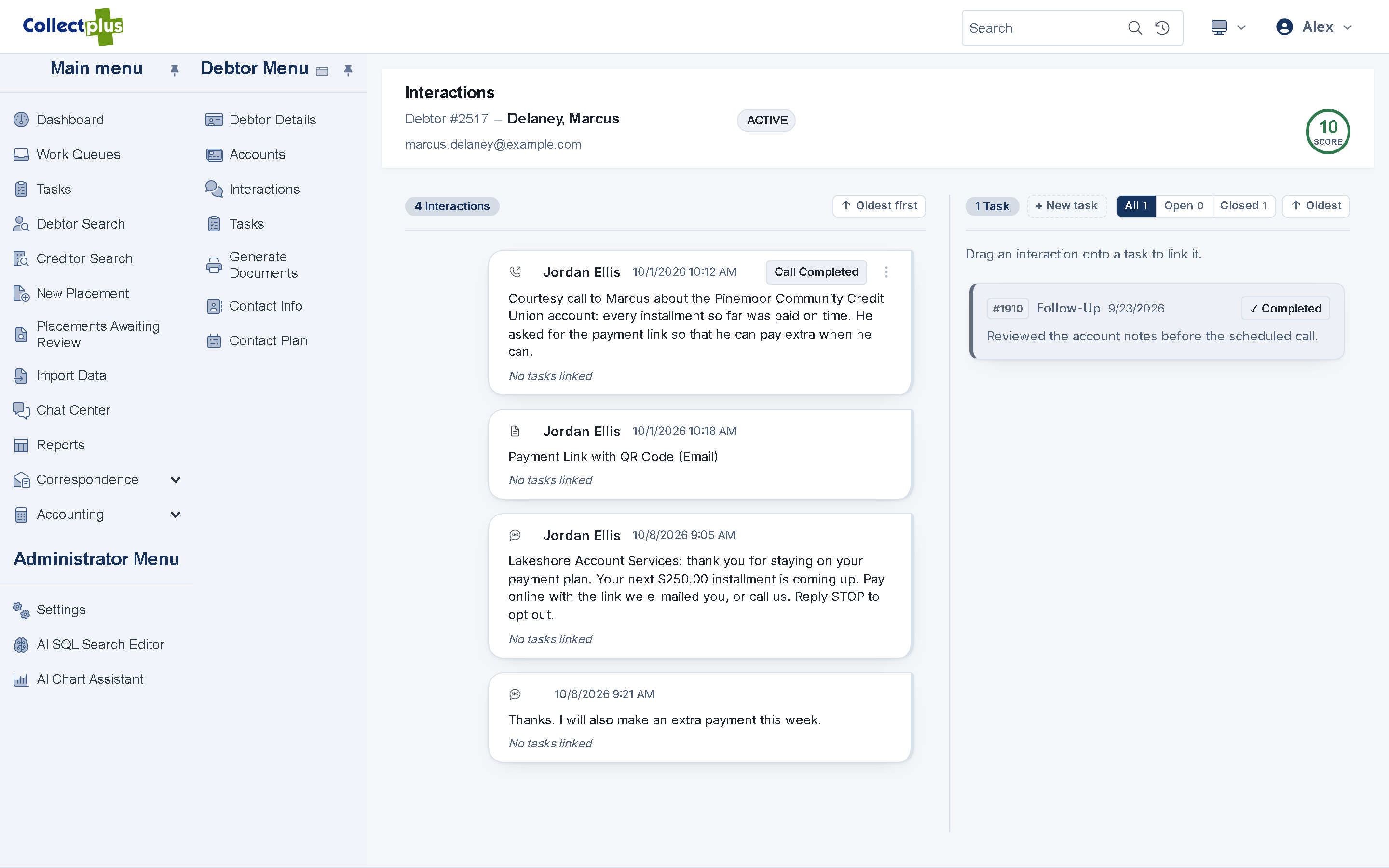
- One interaction timeline. Every inbound and outbound call, letter, email, text message and portal note appears in chronological order on the debtor's record, so a collector sees recent conversations before placing a call.
2. Validation notices and itemization fields
Regulation F requires debt collectors to provide specific validation information at or within five days of initial communication, and provides a safe harbor for agencies that use the CFPB's Model Form B-1 (or specified variations). That notice requires clear itemization data: the creditor's name, account number, itemization date, principal, interest, fees, payments and credits.
- Word letter templates with merge fields. Agencies design their validation notices and follow-up letters in Microsoft Word using CollectPlus merge fields for principal, interest, fees, credits, creditor details and custom fields.
- QR codes and payment links on letters. Place a QR code on your Word template so a consumer who receives a validation notice can scan it with their phone camera to view and pay the live balance on the Pay Now page.
- Document batches with review and exclusions. Generate letter batches from a work queue, preview the batch before sending, and automatically skip accounts marked do-not-contact.
3. Electronic communications, opt-outs and consumer preferences
When communicating by email or text message, Regulation F requires collectors to include a clear and conspicuous way for the consumer to opt out of future electronic messages to that address or phone number, and to honor convenient time and place requests.
- Automatic STOP handling for texts. When a debtor replies
STOPto a text message, CollectPlus records the opt-out on the record and prevents future texts to that number. - Self-service communication preferences. In the debtor portal, consumers can choose how they prefer to be contacted, send secure messages and pay online on their own schedule.
- Email open tracking and failure resends. Track when an email is opened on the debtor's timeline, and review failed deliveries from document batches.
4. Audit trails and record retention
Regulation F requires debt collectors to retain evidence of compliance for three years after the last collection activity on a debt. Because CollectPlus runs on Microsoft SQL Server, every transaction, letter, text message, email, task, call note and settings change is stored in a structured relational database with a complete audit trail.
Note: This guide is for informational purposes only and is not legal advice. CollectPlus provides configurable contact plans, templates, work queues and communication controls that your team sets up to match your compliance counsel's policies.